GHK-Cu — Copper Tripeptide Complex Research Peptide
GHK-Cu is a naturally occurring copper-binding tripeptide, first identified in human plasma, that has become a widely cited reference compound in dermal-remodeling and extracellular-matrix research. Its copper-chelation structure is central to its studied role in collagen and glycosaminoglycan synthesis pathways.
Researchers studying tissue-remodeling and wound-repair mechanisms use GHK-Cu to examine copper-dependent enzymatic activity and its downstream effects on fibroblast behavior in cell-culture models.
Why Copper-Binding Matters
Copper is a required cofactor for several enzymes involved in collagen cross-linking and extracellular-matrix remodeling. GHK-Cu's ability to chelate and deliver copper in a bioavailable form is why it's become a reference compound in fibroblast-behavior and tissue-remodeling research specifically — its activity is directly tied to that structural copper-binding property, unlike most other research peptides in this catalog.
Research Applications
GHK-Cu is one of the more extensively published research peptides, with decades of accumulated in vitro and animal-model literature on copper-dependent enzymatic activity and its downstream effects on cell behavior — giving researchers unusually deep comparative data to work from relative to newer synthetic peptides.
GHK-Cu in the Tissue-Repair Category
Alongside BPC-157 and TB-500, GHK-Cu rounds out Northline's tissue-repair and regenerative research category, though its mechanism is distinct from both — where BPC-157 and TB-500 act on gut-barrier and cytoskeletal pathways respectively, GHK-Cu's activity is tied specifically to copper-dependent enzymatic processes in extracellular-matrix remodeling.
Purity Verification for GHK-Cu
GHK-Cu's copper-chelation structure is central to its biological activity, which makes verifying that the copper-binding complex is correctly formed — not just that a tripeptide of the right general composition is present — a meaningful part of quality verification specific to this compound.
Molecular Profile
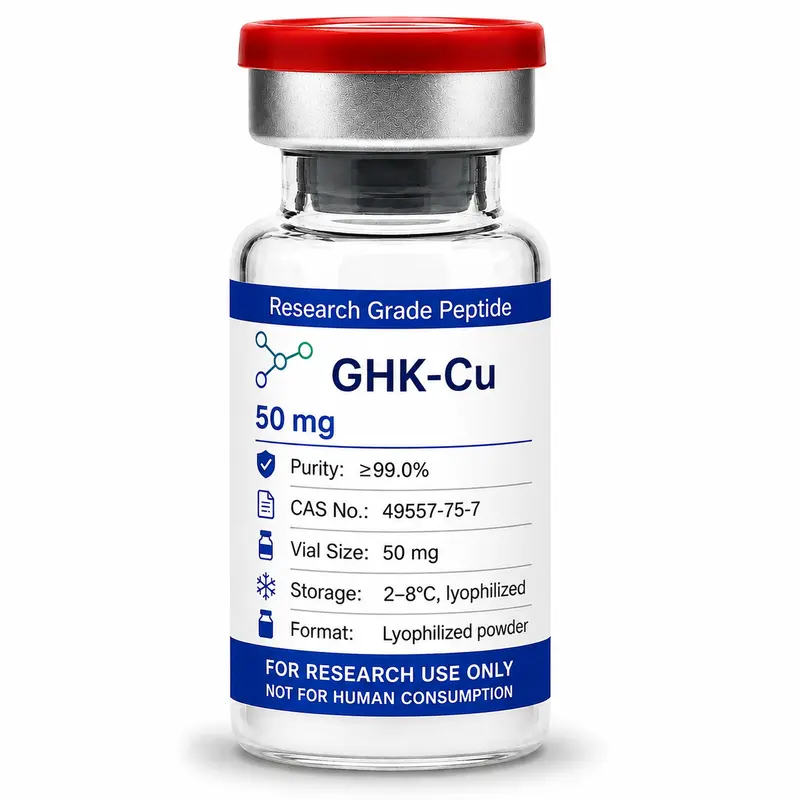
GHK-Cu carries CAS number 49557-75-7. As a naturally occurring plasma tripeptide rather than a purely synthetic construct, it has decades of accumulated comparative literature behind it, giving researchers unusually deep reference data relative to newer synthetic peptides in the same broader tissue-remodeling category.
Who Orders GHK-Cu
Demand spans academic dermatology and wound-healing research labs, biotech groups studying extracellular-matrix biology, and contract research organizations running comparative tissue-remodeling studies.
Why Researchers Choose Northline's GHK-Cu
Northline verifies every GHK-Cu lot with independent HPLC purity testing, with a matched certificate of analysis on every order. Unlike most peptides in our catalog, GHK-Cu ships refrigerated rather than frozen — worth confirming with any supplier, since incorrect storage guidance is a common way purity degrades before material even reaches your bench.
USA-Based, Worldwide Shipping
Refrigerated (2-8°C) cold-chain shipping is standard for GHK-Cu, to research labs across the USA and worldwide. Contact our team about lab accounts for recurring orders.
Storage & Handling Notes
Store lyophilized GHK-Cu refrigerated at 2-8°C — not frozen, unlike most other peptides in our catalog. Once reconstituted, follow standard cold-chain handling and minimize unnecessary temperature fluctuation.
Frequently Referenced Alongside
GHK-Cu is often ordered alongside BPC-157 and TB-500 within Northline's broader tissue-repair and regenerative research category, even though its copper-dependent mechanism is distinct from both.
Frequently Asked Questions
What is GHK-Cu used for in research?
GHK-Cu is studied in dermal-remodeling and extracellular-matrix research, examining copper-dependent enzymatic activity and its effects on fibroblast behavior.
Why is GHK-Cu stored differently from other peptides?
GHK-Cu is stored refrigerated at 2-8°C rather than frozen at -20°C like most other research peptides in our catalog — always follow the specific storage guidance on the certificate of analysis.
What purity does Northline guarantee for GHK-Cu?
Every lot is independently verified at ≥99% purity by reverse-phase HPLC.
Do you ship GHK-Cu internationally?
Yes, we ship to research institutions across the USA and internationally with refrigerated cold-chain packaging.
How is GHK-Cu different from BPC-157 or TB-500?
GHK-Cu's activity is tied to copper-dependent enzymatic processes in extracellular-matrix remodeling, distinct from BPC-157's gut-barrier/angiogenesis pathways and TB-500's actin-regulation mechanism.
Can I order GHK-Cu alongside other tissue-repair peptides?
Yes, many labs order GHK-Cu alongside BPC-157 or TB-500 for comparative tissue-remodeling research — contact our team about lab accounts for multi-compound orders.