What Does 'Research Grade' Actually Mean for Peptides?
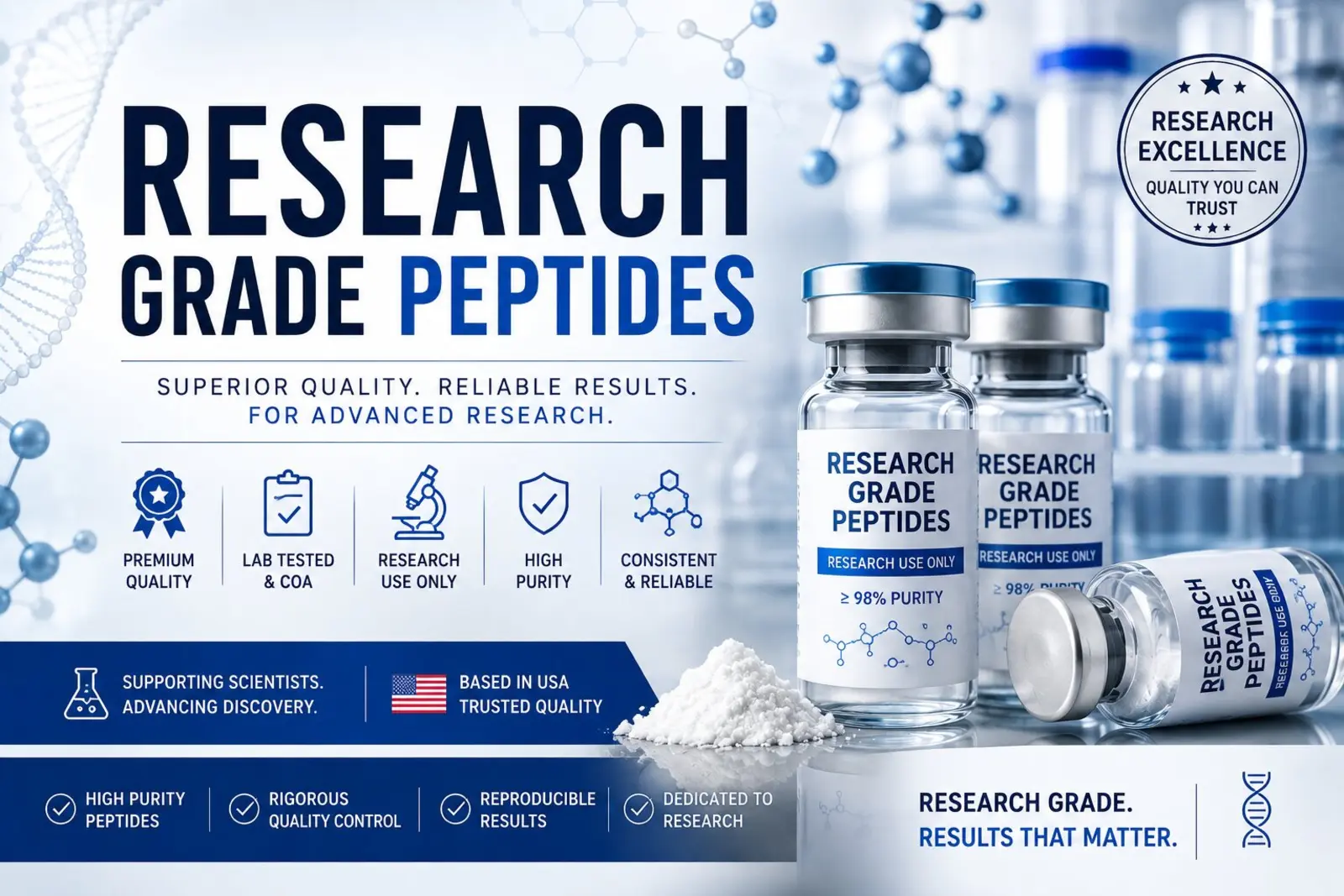
Defining 'Research Grade'
"Research grade" is a term that gets used loosely across the peptide market, but it has a specific practical meaning when applied correctly: a compound synthesized and independently verified to a documented purity and identity standard suitable for laboratory research applications. It is not a formal regulatory designation the way "pharmaceutical grade" or "USP grade" are in drug manufacturing — which is exactly why the verification behind the label matters more than the label itself.
The Verification Standard Behind Research Grade Peptides
For a peptide to genuinely earn the research grade description, two things need to be independently confirmed: purity, via reverse-phase HPLC, expressed as a percentage of target compound relative to synthesis byproducts; and identity, via mass spectrometry, confirming the amino-acid sequence matches the intended compound. High purity research peptides — generally 98% or above — paired with mass-spec sequence confirmation is the practical bar that separates genuinely research grade material from a compound that's simply labeled that way without documentation behind it.
How Research Grade Differs From Other Categories
Research grade peptides differ from pharmaceutical-grade compounds in that they haven't gone through clinical trials, FDA drug approval, or pharmaceutical manufacturing (GMP) certification — they're manufactured and documented specifically for laboratory research use, not for human or veterinary administration. They also differ from lower-tier "technical grade" chemical products, which may not carry any independent purity or identity verification at all. Research grade sits in a specific middle category: rigorously documented for the lab bench, but explicitly not approved or intended for use as a drug.
Common Research Peptide Categories at a Glance
Research grade peptides span several distinct categories, each with its own typical purity benchmark and storage profile: tissue-repair and regenerative peptides (BPC-157, TB-500, GHK-Cu), metabolic and incretin peptides (native GLP-1, Semaglutide, Tirzepatide), growth-hormone pathway peptides (Ipamorelin, CJC-1295), and specialty research compounds (Epithalon, Selank) tied to more specific research niches like cellular senescence or cognitive-performance modeling. Purity benchmarks across these categories generally sit between 98% and 99%+, verified by HPLC, though exact thresholds vary by compound and intended application.
How Northline's COA Process Works, Step by Step
Each production lot is synthesized, then sent to an independent laboratory for reverse-phase HPLC purity analysis and mass-spectrometry sequence confirmation. If a lot doesn't clear our purity threshold or doesn't match the correct sequence, it's not released for sale — it doesn't get blended into a passing batch or discounted instead of discarded. Once a lot clears verification, its specific COA (purity result, method, sequence confirmation, appearance notes, and test date) is matched to that production run and included with every order shipped from it, so what you receive documentation for is exactly what's in your vial.
Custom Research Peptides and Specialized Synthesis
Beyond standard catalog compounds, some research peptide manufacturers USA offer custom research peptides USA synthesis for labs needing a specific sequence, modification, or scale not available off-the-shelf. Custom synthesis should carry the same verification standard as catalog products — independent purity and identity confirmation — regardless of how specialized the request is.
How Northline Approaches Research Grade Verification
Every compound in Northline's catalog is treated as research grade in the fullest sense: independently HPLC-tested for purity, mass-spec verified for sequence identity, and shipped with a certificate of analysis matched to the specific production lot — not a generic specification sheet. This is the same standard we apply whether you're ordering a single 5mg vial or setting up a wholesale lab account for recurring research peptide laboratory supply needs.
Frequently Asked Questions
Is 'research grade' a regulated term?
No, unlike pharmaceutical-grade or USP-grade designations, 'research grade' is not a formal regulatory classification. Its meaning depends entirely on the verification standard a specific supplier actually applies.
What purity percentage counts as research grade?
Generally, 98% purity or higher, independently verified by HPLC, is considered the practical standard for high purity research peptides, though this should always be confirmed with sequence verification via mass spectrometry.
What's the difference between research grade and pharmaceutical grade?
Pharmaceutical grade compounds have gone through clinical trials, regulatory approval, and GMP manufacturing certification for human or veterinary use. Research grade compounds are documented for laboratory research use only and have not gone through that approval pathway.
Can I request custom research peptide synthesis?
Some research peptide manufacturers offer custom synthesis for specific sequences or modifications. Contact our team to discuss whether a custom research peptide falls within our sourcing capabilities.
How do I confirm a peptide is genuinely research grade before I buy?
Request the certificate of analysis for the specific lot you'd receive, and confirm it shows both HPLC purity data and mass-spectrometry sequence confirmation, not just an asserted purity percentage.
Does research grade mean the compound is safe for human use?
No. Research grade specifically means the compound is documented and verified for laboratory research use. It has not undergone the safety and efficacy testing required for human or veterinary use.