
Tirzepatide and Dual-Receptor Agonism: What Makes It Different
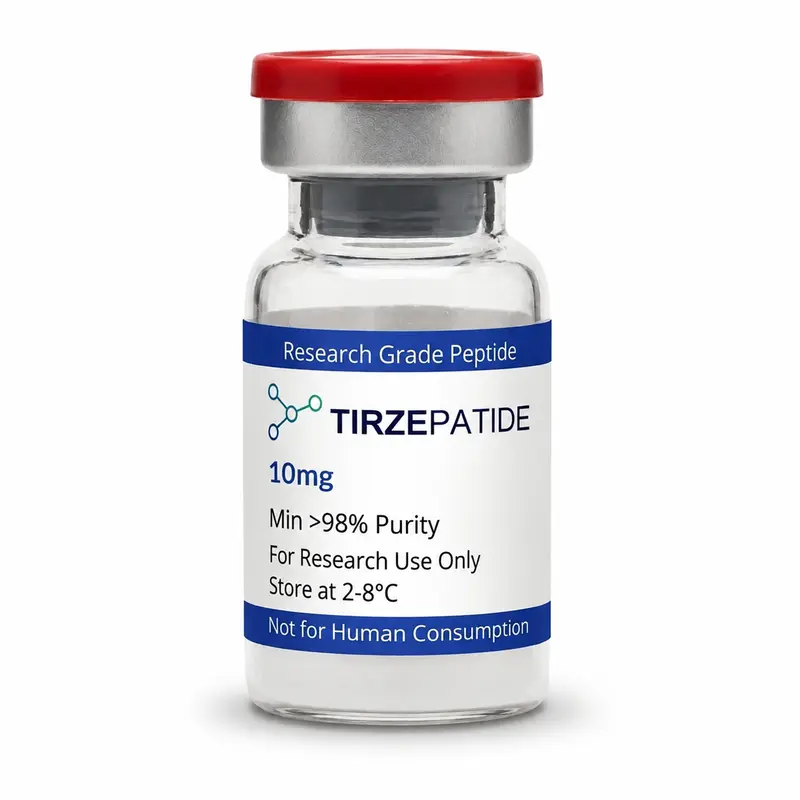
Two receptors, one peptide
Most incretin-mimetic research peptides — Semaglutide included — target a single receptor, GLP-1. Tirzepatide's defining feature is that it's engineered to engage both the GLP-1 receptor and the GIP (glucose-dependent insulinotropic polypeptide) receptor within a single sequence, which is a meaningfully different design approach.
Why dual-receptor design matters for researchers
GIP and GLP-1 pathways interact with glucose and lipid metabolism through different, only partially overlapping mechanisms. A single compound capable of engaging both allows researchers to study combined-pathway effects without needing to co-administer two separate agonists — useful in comparative signaling studies where isolating combined-versus-single-receptor outcomes is the whole point.
Where it shows up in the literature
Tirzepatide is increasingly used as the reference compound in dual-agonist and multi-receptor incretin research, particularly in studies comparing signaling outcomes against single-receptor agonists to characterize what the added GIP engagement actually changes downstream.
Sourcing notes
As a larger, more structurally complex peptide than single-receptor analogs, Tirzepatide is more prone to synthesis-quality variation between suppliers. Mass-spec sequence confirmation — not just an HPLC purity number — is worth insisting on.
Further reading
- Search current Tirzepatide literature on PubMed — peer-reviewed studies indexed by the National Library of Medicine.
- View the Tirzepatide compound record on PubChem — chemical structure and reference data from NCBI.
- Look up CAS 2023788-19-2 on CAS Common Chemistry — registry verification from the American Chemical Society.