BPC-157 Explained: Origin, Mechanism, and What the Research Shows
Where BPC-157 comes from
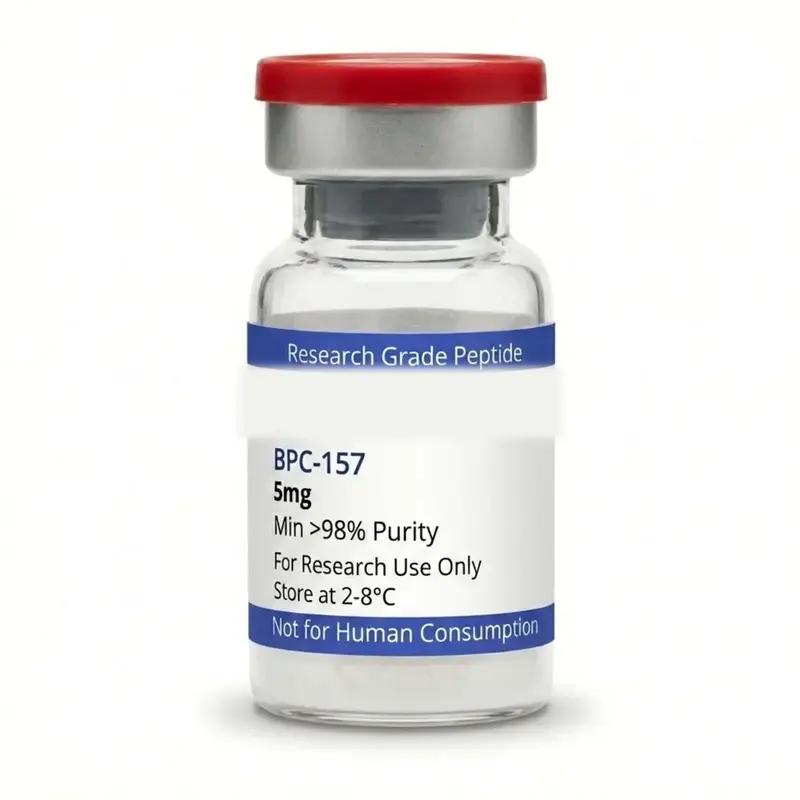
BPC-157 stands for "Body Protection Compound-157," a name assigned by early researchers studying a naturally occurring protective peptide sequence identified in human gastric juice. The synthetic version used in laboratories today is a stable 15-amino-acid fragment engineered to replicate the activity of that native sequence without needing the full parent protein.
Why it's stable enough to study easily
One reason BPC-157 shows up constantly in comparative peptide-stability literature is that it remains active across an unusually wide pH range in vitro — a practical property for anyone running assays that involve varying acidity, since many peptides degrade quickly outside narrow pH windows. This stability is part of what makes it a convenient reference compound rather than a fragile one.
What current research is looking at
Published in vitro and animal-model studies have examined BPC-157 in the context of cellular migration, angiogenesis (new blood vessel formation), and gut-barrier integrity. It's frequently used as a comparison point in wound-healing and tissue-repair pathway research, though — like most research peptides — study designs, models, and dosing vary widely across the literature, so results should always be read in the context of the specific model used.
What to check when sourcing it
Because BPC-157 is one of the most commonly requested research peptides, it's also one of the most commonly sold without real documentation. At minimum, look for a certificate of analysis matched to the specific lot you're receiving (not a generic one reused across batches), confirmation of purity by HPLC, and mass-spec sequence verification — not just a purity percentage printed on a label.
Further reading
- Search current BPC-157 literature on PubMed — peer-reviewed studies indexed by the National Library of Medicine.
- View the BPC-157 compound record on PubChem — chemical structure and reference data from NCBI.
- Look up CAS 137525-51-0 on CAS Common Chemistry — registry verification from the American Chemical Society.