
TB-500 (Thymosin Beta-4 Fragment): A Practical Research Overview
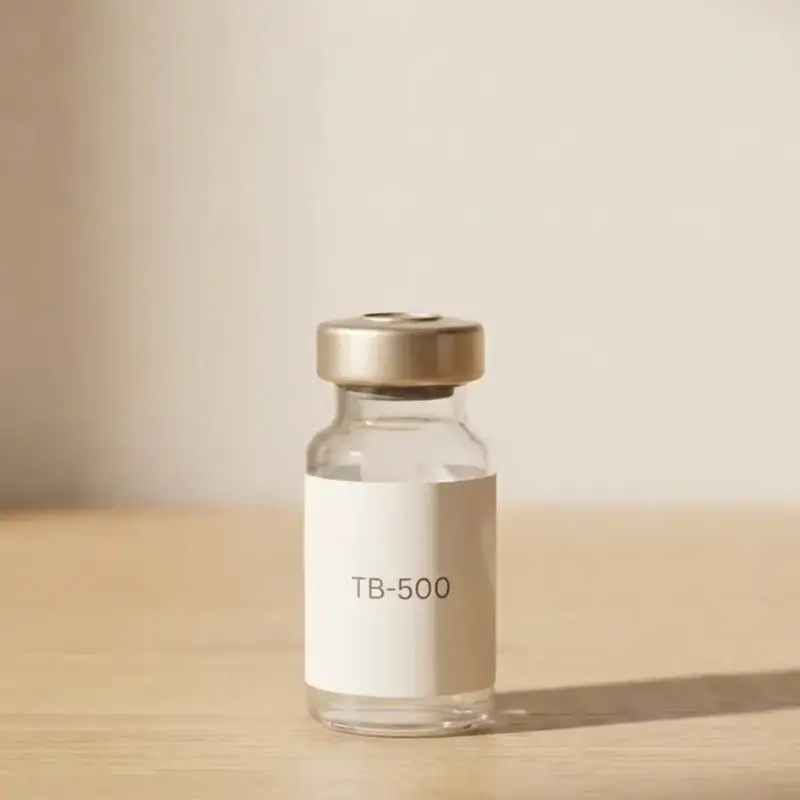
The parent protein: Thymosin Beta-4
TB-500 isn't a standalone discovery — it's a synthetic fragment derived from Thymosin Beta-4, a small protein naturally present in nearly all human and animal cells, where it regulates actin, the protein that forms a cell's internal structural scaffolding. Because actin dynamics are central to how cells move and reorganize, Thymosin Beta-4 (and by extension TB-500) sits at the center of cell-migration research.
Why researchers use the fragment, not the whole protein
Working with a full-length protein in a lab setting is often less practical than working with a short, stable, well-characterized fragment. TB-500 preserves the region of Thymosin Beta-4 believed to be most active in actin-sequestering behavior, while being small enough to synthesize consistently and handle predictably across experiments.
What it's used for in current studies
TB-500 is a recurring reference compound in angiogenesis studies, cell-motility assays, and comparative research examining how synthetic fragments perform relative to native full-length Thymosin Beta-4. Because of its role in cytoskeletal regulation, it also appears in broader tissue-remodeling literature alongside compounds like BPC-157, sometimes as a comparator, sometimes in combined-protocol study designs.
Sourcing considerations
TB-500's small size makes it relatively straightforward to verify by mass spectrometry, so there's little excuse for a supplier not to provide sequence confirmation alongside a purity percentage. A real certificate of analysis should show both — not purity alone.
Further reading
- Search current TB-500 literature on PubMed — peer-reviewed studies indexed by the National Library of Medicine.
- View the TB-500 compound record on PubChem — chemical structure and reference data from NCBI.
- Look up CAS 77591-33-4 on CAS Common Chemistry — registry verification from the American Chemical Society.