
Epithalon: The Four-Amino-Acid Peptide Behind Senescence Research
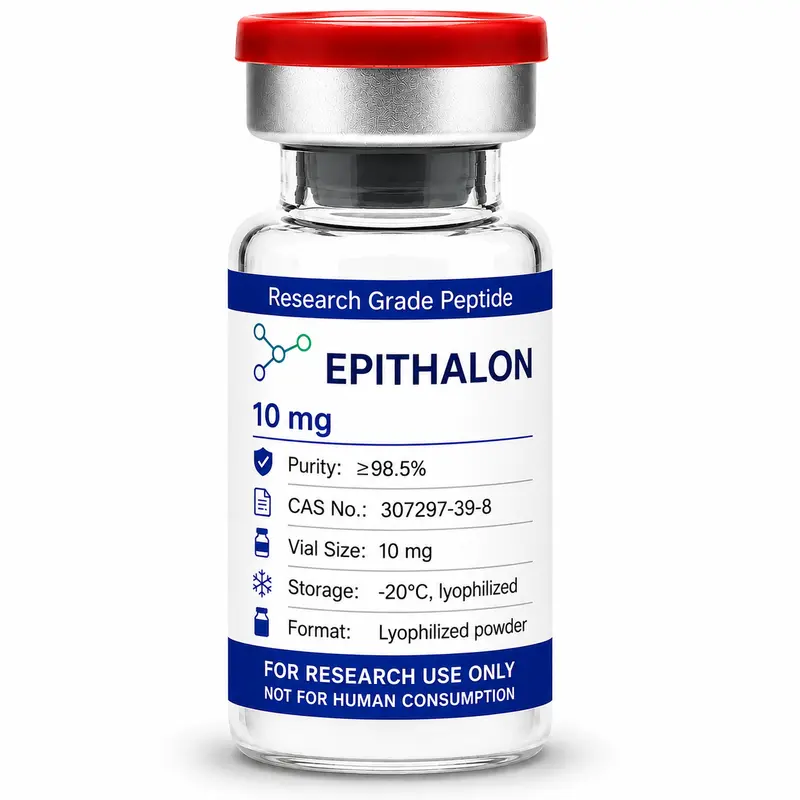
A short sequence with an outsized research footprint
Epithalon (sometimes written Epitalon) is about as simple as research peptides get structurally: a synthetic tetrapeptide with the sequence Ala-Glu-Asp-Gly, abbreviated AEDG. It was developed as a synthetic analog of a peptide naturally produced by the pineal gland.
Why it's tied to senescence research specifically
Epithalon shows up consistently in literature examining telomerase activity and chromosomal aging markers — the mechanisms cells use (or fail to use) to maintain telomere length across successive divisions. Its small size and simple structure make it a practical model compound for in vitro cell-culture studies tracking proliferation limits.
What current studies focus on
Most published research involving Epithalon centers on comparative in vitro work — looking at senescence markers and proliferative capacity in cell lines exposed to the compound versus controls. As with most research peptides, results are model-dependent, and readers should be cautious about extrapolating cell-culture findings beyond the specific system studied.
Sourcing notes
Because Epithalon's sequence is so short, mass-spec verification is quick and inexpensive for a supplier to provide — there's little justification for a COA that shows purity without sequence confirmation.
Further reading
- Search current Epithalon literature on PubMed — peer-reviewed studies indexed by the National Library of Medicine.
- View the Epithalon compound record on PubChem — chemical structure and reference data from NCBI.
- Look up CAS 307297-39-8 on CAS Common Chemistry — registry verification from the American Chemical Society.